
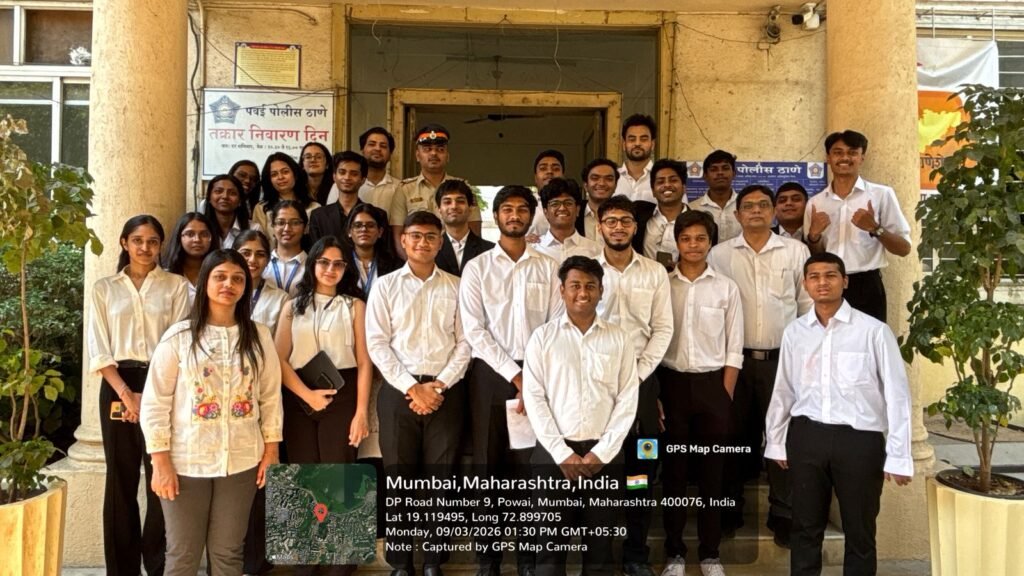
09/03/2026: Organised visit to Powai Police Station
The Centre for Research in Criminal Justice (CRCJ), Maharashtra National Law University Mumbai, recently organised an educational visit to the Powai Police Station to observe the practical application of evolving criminal procedures. The primary objective of the visit was to bridge the gap between academic theory and the ground-level implementation of the Bharatiya Nagarik Suraksha Sanhita (BNSS), allowing participants to examine the transition toward a more modern procedural framework. A significant portion of the engagement Also focused on the functioning of the Crime and Criminal Tracking Network and Systems (CCTNS), providing insights into how digital infrastructure and real-time data integration enhance transparency, accountability, and efficiency within the criminal justice system.
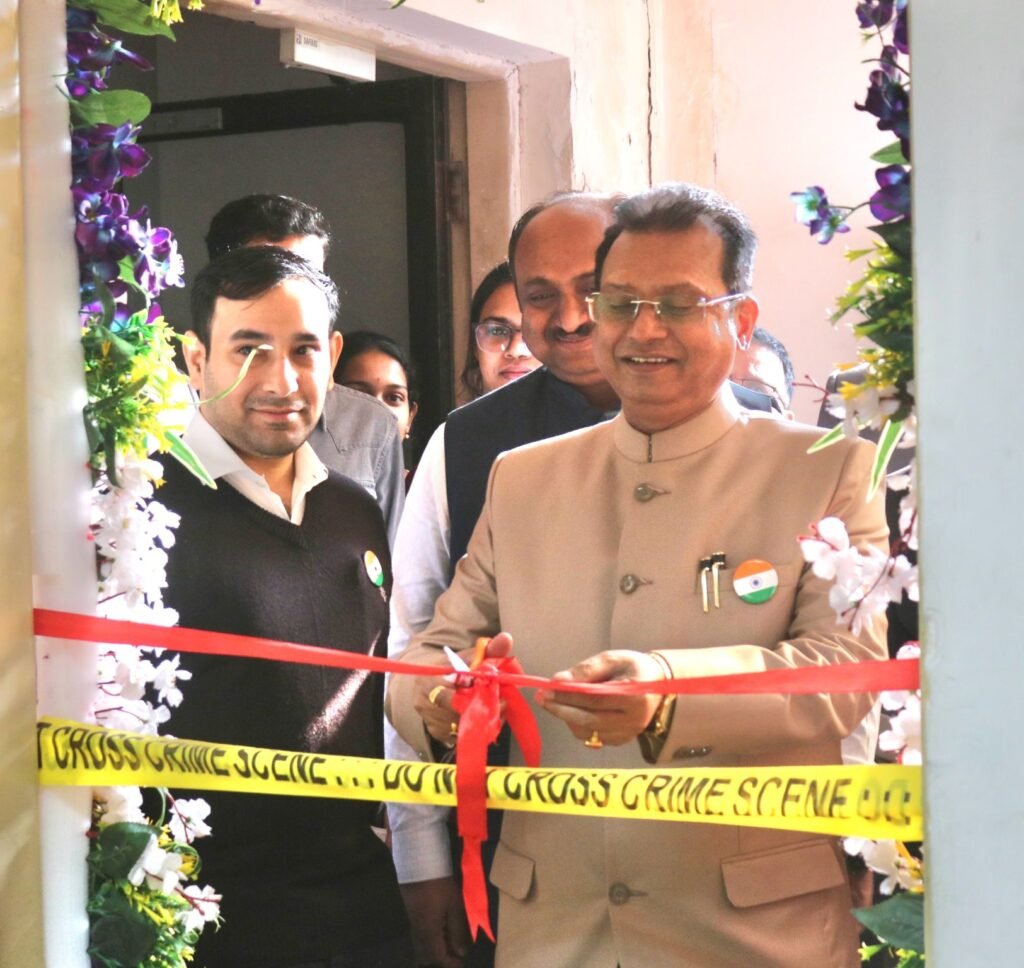
26/01/2026: Inauguration of Forensic Training Laboratory at MNLU Mumbai
On the auspicious occasion of Republic Day, 26 January 2026, Maharashtra National Law University Mumbai established a dedicated Forensic Training Laboratory in the gracious presence of Hon’ble Vice-Chancellor, Prof. (Dr.) Dilip Ukey. The inauguration marked a significant step in strengthening interdisciplinary legal education and advancing practical training in criminal justice.
The initiative reflects the University’s commitment to integrating scientific investigation with legal education and aligns with national efforts toward modernising criminal investigations and strengthening evidence-based justice delivery. The event was also attended by senior university officials, underscoring institutional support for expanding research and training infrastructure.
The Forensic Training Laboratory has been conceptualised as a specialised facility to provide hands-on exposure in areas such as crime scene management, fingerprint analysis, and allied forensic disciplines. By bridging theoretical instruction with applied forensic practice, the laboratory seeks to enhance professional competence among students and practitioners engaged in the criminal justice system.
The facility will support training programmes, workshops, and collaborative initiatives with law enforcement agencies, forensic professionals, and academic institutions. It further complements the University’s Postgraduate Diploma in Crime Investigation, Medical Jurisprudence and Forensic Science and its emphasis on forensic justice within academic programmes.
The establishment of the laboratory represents an important milestone in MNLU Mumbai’s continuing efforts to promote research-driven, practice-oriented legal education.
03/10/2025: Organised Global Conference on “Technology, Crime, and Transformative Justice for Gender Equity”
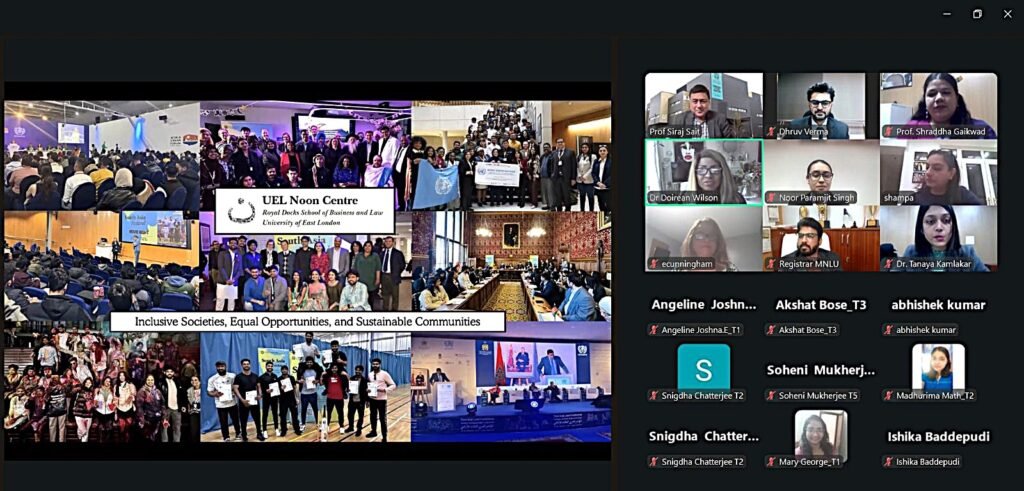
The Centre for Research in Criminal Justice (CRCJ), Maharashtra National Law University Mumbai, successfully organised the Global Conference on “Technology, Crime, and Transformative Justice for Gender Equity” on 3rd and 4th October 2025. The conference was held in collaboration with Temple University (USA), the University of East London (England), and The Noon Centre for Equality and Diversity in Business.
The two-day conference brought together students, scholars, legal practitioners, and policy experts to examine pressing issues at the intersection of technology, criminal law, and gender justice. Discussions focused on women’s rights and LGBTQIA+ rights within rapidly evolving technological and legal frameworks.
Through thematic panel discussions, the conference explored progressive legal reforms, intersectional approaches to feminism and LGBTQIA+ advocacy, and the role of technology in detection, awareness, education, and prevention of crime. Particular attention was given to the development of inclusive and forward-looking policies capable of responding to technology-enabled harms.
The conference served as a platform for interdisciplinary engagement and collaborative dialogue, encouraging participants to reflect on how law and policy can adapt to emerging digital challenges. By facilitating rigorous academic exchange and cross-institutional interaction, the event contributed meaningfully to ongoing conversations surrounding equality, accountability, and transformative justice in contemporary criminal justice systems.
07/04/2025: Academic Visit by Delegation from Leiden University
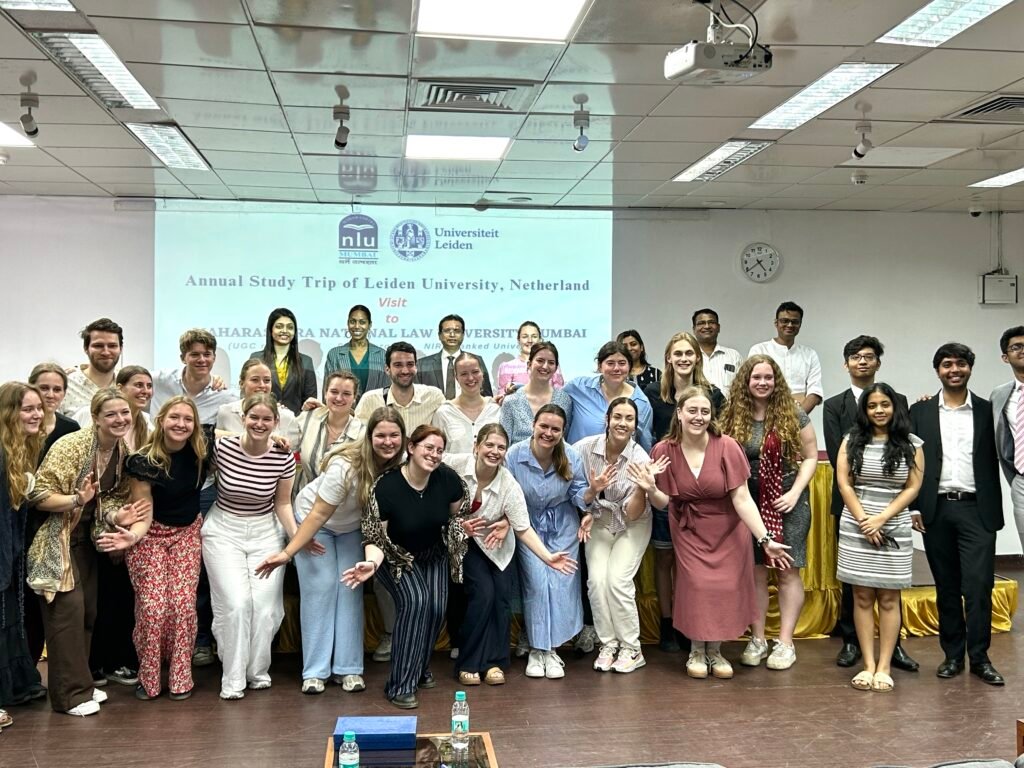
The Centre for Research in Criminal Justice (CRCJ), Maharashtra National Law University Mumbai, hosted a delegation of students from Leiden University as part of an academic visit aimed at fostering international engagement and comparative legal dialogue. A batch of approximately 50 students visited CRCJ and participated in structured academic interactions with faculty members on themes relating to Indian Criminal Law and the functioning of the Indian Criminal Justice System.
The visit provided an opportunity to explore doctrinal foundations, procedural structures, and recent reforms in India’s criminal law framework. Discussions focused on substantive criminal law, procedural safeguards, investigative processes, and broader institutional mechanisms that shape the administration of justice in India. Comparative perspectives were also addressed, enabling participants to reflect on similarities and distinctions between legal systems.
The interaction served as a platform for cross-border academic exchange and intellectual engagement, strengthening institutional ties and promoting dialogue between students and faculty from different legal traditions. Such visits contribute to CRCJ’s broader objective of encouraging comparative research, global collaboration, and deeper understanding of criminal justice systems in diverse jurisdictions.
The programme reaffirmed the Centre’s commitment to international academic partnerships and meaningful scholarly exchange in the field of criminal law and justice.
18/06/2024: Organised Workshop on the Three New Criminal Laws, 2023
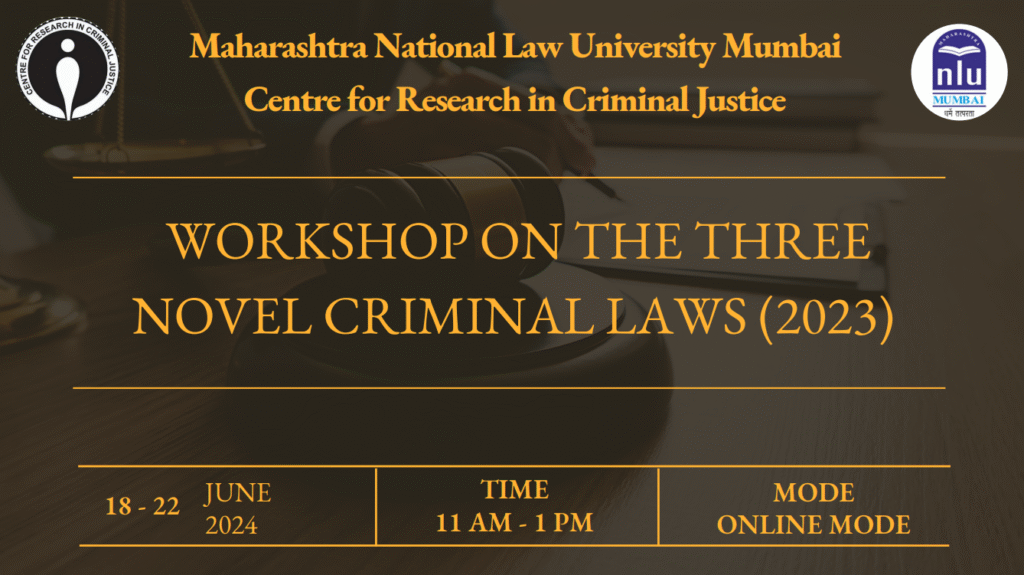
The Centre for Research in Criminal Justice (CRCJ), Maharashtra National Law University Mumbai, organised a five-day Workshop on the Three New Criminal Laws from 18 to 22 June 2024. The workshop was designed to provide a comprehensive understanding of the recently enacted criminal law framework comprising the Bharatiya Nyaya Sanhita, the Bharatiya Nagarik Suraksha Sanhita, and the Bharatiya Sakshya Adhiniyam, which replace the Indian Penal Code, Code of Criminal Procedure, and Indian Evidence Act respectively.
The programme examined the historical background, legislative intent, and structural changes introduced through these enactments. Sessions focused on key reforms, procedural shifts, evidentiary standards, and the broader implications of transitioning to a new criminal justice framework. Particular emphasis was placed on understanding how these changes impact investigation, prosecution, trial processes, and rights of accused persons and victims.
Designed for law students, academicians, and legal professionals, the workshop aimed to bridge doctrinal study with practical application. Expert-led sessions enabled participants to critically analyse the rationale behind the reforms and assess their potential impact on the administration of criminal justice in India.
The workshop formed part of CRCJ’s broader initiative to facilitate informed engagement with contemporary legal developments and to contribute meaningfully to discussions surrounding the modernization of India’s criminal justice system.
11/05/2024: Organised Expert Talk on “Journey of a Criminal Trial under the Bharatiya Nagarik Suraksha Sanhita, 2023”
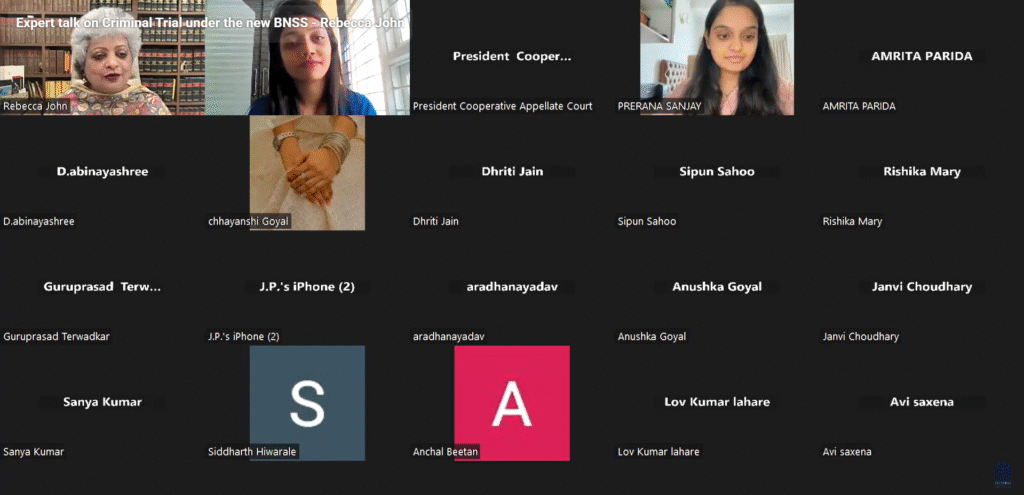
On 11 May 2024, the Centre for Research in Criminal Justice (CRCJ), Maharashtra National Law University Mumbai, organised an Expert Talk on “Journey of a Criminal Trial under the Bharatiya Nagarik Suraksha Sanhita, 2023.” The session was delivered by Adv. Rebecca Mammen John, Senior Advocate, Supreme Court of India.
The lecture focused on the procedural framework introduced under the Bharatiya Nagarik Suraksha Sanhita (BNSS), 2023, and traced the stages of a criminal trial under the new regime. The speaker highlighted key structural and procedural changes from the earlier Code of Criminal Procedure, examining their implications for investigation, framing of charges, conduct of trial, and evidentiary processes.
Drawing from her extensive courtroom experience, Adv. John emphasised the importance of procedural safeguards and due process within the reformed framework. The session provided clarity on how the BNSS seeks to balance efficiency in criminal proceedings with the protection of individual rights, offering valuable insight into the practical realities of trial advocacy under the new criminal law system.
28/03/2024: Organised Expert Talk on “The Nirbhaya Case and Its Aftermath”
The Centre for Research in Criminal Justice (CRCJ), Maharashtra National Law University Mumbai, organised an Expert Talk on “The Nirbhaya Case and Its Aftermath” on 28 March 2024. The session was delivered by Adv. Karan Kadam, who offered a thoughtful examination of one of the most significant criminal cases in recent Indian legal history.
The talk explored the legal and societal impact of the Nirbhaya case, particularly the legislative and procedural reforms that followed. The speaker discussed key amendments to criminal law, developments in jurisprudence relating to sexual offences, and the practical challenges faced during investigation and trial in such cases. Attention was also drawn to the broader implications of public discourse, media scrutiny, and victim-centric reforms in shaping criminal justice responses.
The session encouraged participants to reflect on the balance between due process and the demand for swift justice, as well as the continuing need to strengthen investigative and institutional mechanisms. Students and faculty engaged actively in discussion, raising questions on procedural safeguards, evidentiary standards, and the effectiveness of post-reform measures.
The lecture provided valuable insight into how landmark cases influence legal reform and public understanding of justice in India, reinforcing CRCJ’s focus on critical engagement with contemporary criminal law developments.

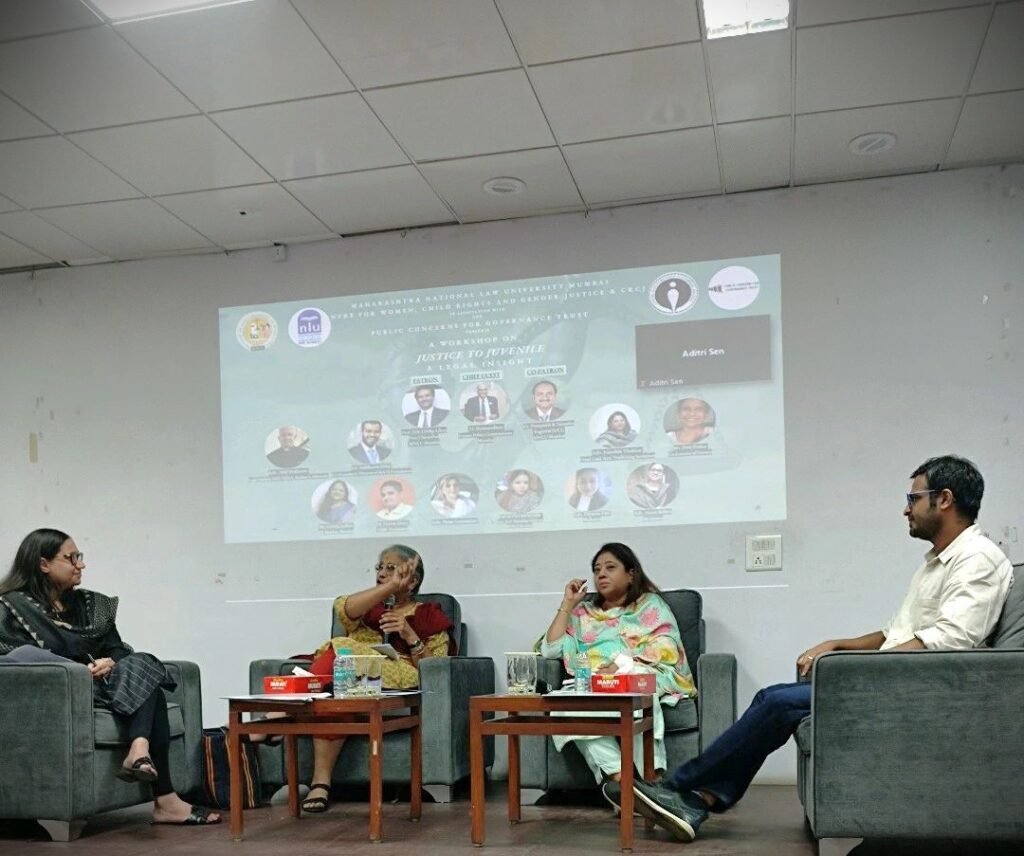
13/01/2024: Organised National Workshop on Juvenile Justice in collaboration with Centre for Women, Child Rights and Gender Justice and Public Concern for Governance Trust
The Centre for Research in Criminal Justice (CRCJ), Maharashtra National Law University Mumbai, organised a One-Day National Workshop on Juvenile Justice that brought together scholars, practitioners, and students for an in-depth engagement on contemporary issues affecting juveniles in the criminal justice system. The workshop featured two panel discussions that fostered meaningful dialogue on the doctrinal foundations and practical challenges inherent in juvenile justice law and policy in India.
Drawing on interdisciplinary perspectives, the workshop examined core themes such as the interface between youth behaviour and legal accountability, the evolving principles of juvenile justice, and how societal attitudes towards young offenders shape legal responses and rehabilitation frameworks. Participants discussed key provisions of existing legislation, procedural safeguards, and international standards in juvenile justice, stimulating rich exchange on both policy and practice.
The event provided a platform for thought leaders, academicians, and students to critically engage with the complexities surrounding juvenile delinquency, rehabilitation, and reintegration. Through focused discussions and expert insights, participants were encouraged to consider innovative approaches that balance legal responsibility with developmental needs of young offenders.
This workshop reaffirmed CRCJ’s commitment to creating spaces for nuanced academic discourse on critical criminal justice issues and strengthening understanding of legal frameworks that impact vulnerable populations.